How Stratford City’s biggest challenges became its greatest assets
A non-negotiable Olympic deadline, operational railway lines and some of London's most complex infrastructure challenges. Fifteen years on, RISE founders Keith Whitmore and Simon Cochrane reflect on the pivotal roles they played in delivering Stratford City during their time at Westfield.
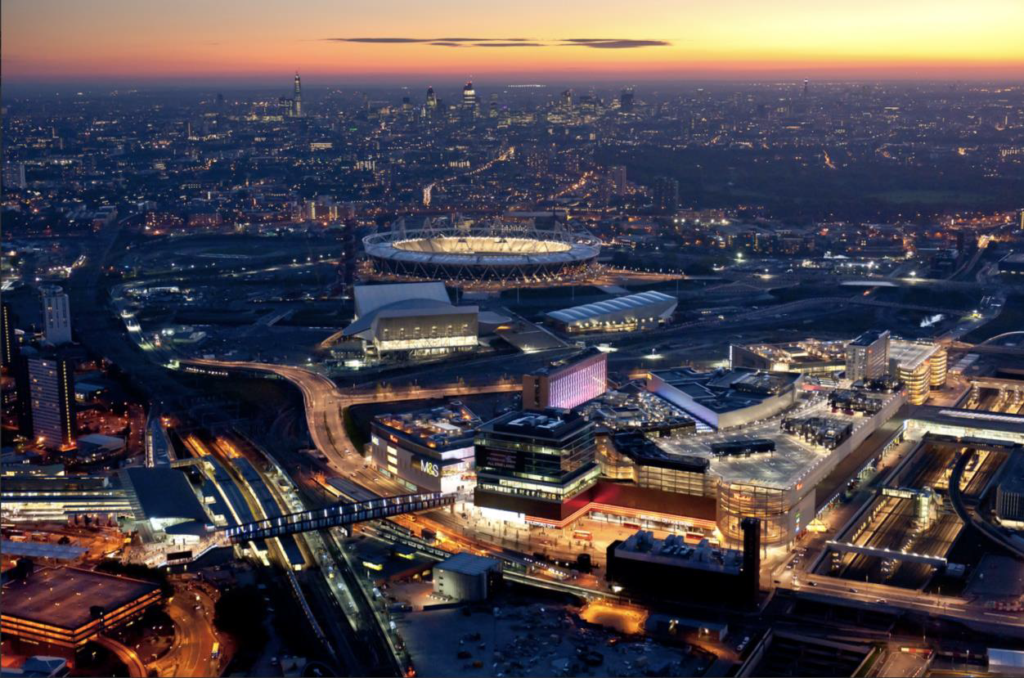
When Westfield Stratford City opened in September 2011, it marked a major milestone in the transformation of former railway and industrial land into one of Europe’s largest urban mixed-use developments.
Today, the £1.8 billion destination remains one of the UK’s most visited shopping centres. Figures released this September revealed its highest annual footfall since 2012, with 53.4 million visits over the preceding 12 months and a record-breaking 5.22 million in July alone.
At a time when the future of physical retail is regularly questioned, Stratford offers a compelling counterargument. But behind its commercial success lies a remarkable story of infrastructure investment, complex engineering and the extraordinary pressure to deliver ahead of the London 2012 Olympic and Paralympic Games.
The world was watching
Westfield’s ambitions for Stratford predated London’s successful Olympic bid, but securing the Games brought new momentum and vital infrastructure investment, accelerating the development by an estimated five to seven years.
It also created a considerable delivery challenge.
Westfield Stratford City needed to open in September 2011, ahead of the Games, with the infrastructure and transport connections necessary to accommodate the millions of visitors expected the following summer.
Construction began in 2008, against a backdrop of economic uncertainty.
Keith Whitmore, now a co-founder of RISE, was Westfield’s Head of Design and Construction, overseeing the delivery of the development and its associated works.
“The real challenge wasn’t simply the scale of the project. It was making hundreds of interdependent decisions, knowing that one mistake could have consequences across the entire programme. The world was watching, and it wasn’t just Westfield’s reputation at stake, but the UK’s. Delays simply weren’t an option.”
The ambition was clear. Making it happen on one of London’s most complex and constrained sites was another matter entirely.
No ordinary building site
Surrounded by operational railway lines on three sides, Stratford City was anything but a straightforward development site.
The former industrial land was separated from the existing town centre by major railway infrastructure. Construction access was severely restricted, space for materials and machinery was limited, and works over and alongside the tracks had to be carefully planned around services that could not simply stop running.
The challenge was not just building a major new destination. It was creating the connections that would make it accessible, while working around one of London’s busiest transport interchanges.
Simon Cochrane, a co-founder of RISE, was Westfield’s Director of Design UK/Europe, leading the masterplanning, planning and design of Stratford City.
“We weren’t starting with a blank canvas. The railway infrastructure dictated where we could build, how we could build and how people would ultimately move through the site. We had to find ways of overcoming those constraints without compromising the ambition for the wider development.”
One of the most significant interventions was the Stratford Town Centre Link, a 130-metre pedestrian bridge spanning 11 live railway tracks.
With an assembly area only around a third of the bridge’s eventual length, the substantial steel structure had to be built and launched into position in stages. The final launch took place directly above operational railway tracks and platforms, an engineering first in the UK.
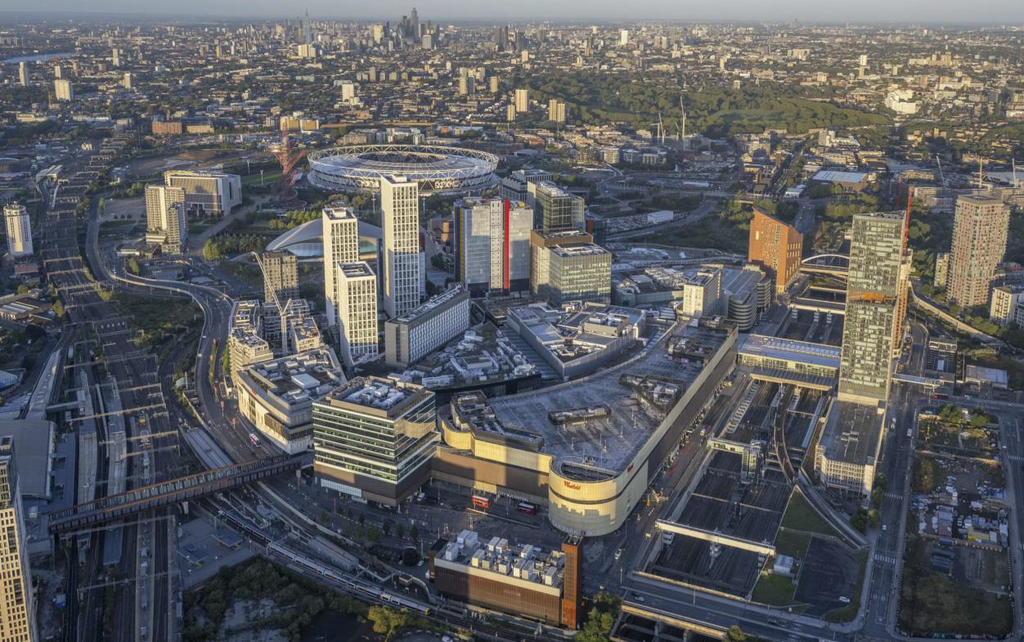
The bridge was just one part of a much wider infrastructure programme. New road connections, station improvements, railway crossings and pedestrian routes all had to be integrated with the development, the existing town centre and the emerging Olympic Park.
Each intervention brought its own technical challenges, but none could be considered in isolation. Together, they transformed a constrained, disconnected site into a major new gateway to East London.
A delicate balancing act
Engineering solutions alone were never going to be enough.
Behind the construction programme was an equally demanding exercise in aligning the ambitions of Westfield, transport authorities, Olympic organisers, local government and the many other organisations with a stake in Stratford’s future.
The challenge went far beyond securing approvals. Delivering infrastructure that connected seamlessly with the wider transport network and surrounding developments required navigating competing priorities, complex technical requirements and overlapping responsibilities.
For Simon, engaging with the various parties involved was a key part of leading the design process.
“Everyone came to the table with different priorities, and understandably so. We worked with an incredibly broad range of stakeholders, from the Mayor of Newham and Southwark Council to the London Organising Committee of the Olympic and Paralympic Games and Peter Hendy at Transport for London. The Design Review Panel brought together some of the UK’s most respected architectural figures, including Frank Duffy CBE, past President of RIBA, and Paul Finch OBE, who also chaired the Commission for Architecture and the Built Environment. It was about understanding different perspectives, balancing competing requirements and finding solutions that brought everyone together behind a shared ambition.”
Working with and supporting stakeholders at this level was an important part of Keith and Simon’s responsibilities, particularly as preparations for the Games intensified.
While Simon was instrumental in shaping the vision for Stratford City, Keith held overall responsibility for its design and construction, making the critical strategic decisions that would determine how the development was delivered.
“On a project of this scale and complexity, the decisions you make at the outset shape everything that follows. You have to anticipate challenges before they arise, get the sequencing right, make difficult calls with confidence and understand how every decision affects the wider development. Ultimately, it’s about bringing the right people together and making informed decisions, even under considerable pressure.”
A legacy still unfolding
Stratford City’s ambitions extended far beyond retail.
The 73-hectare masterplan envisaged a new mixed-use district, encompassing homes, workplaces, leisure facilities and public spaces.
Beyond the shopping centre itself, Westfield’s initial scheme incorporated the Aspers casino, a multiplex cinema, hotels and serviced apartments. Significant transport improvements included a new ticket hall and links to Stratford International station.
Stratford City took shape alongside other major Olympic projects, most notably the neighbouring Athletes’ Village, which Lendlease was delivering on behalf of the Olympic Delivery Authority.
Westfield’s investment continued long after the Games, with subsequent phases seeing the delivery of additional office space and 1,050 units of student accommodation, followed later by HMRC’s regional headquarters and, more recently, the award-winning Coppermaker Square build-to-rent development, comprising 1,225 rental homes.
The vision RISE founders Keith and Simon helped realise at Stratford City became a catalyst for a much wider transformation. Across Queen Elizabeth Olympic Park and its surrounding neighbourhoods, more than 11,500 homes have been built and over 25,000 jobs created, complemented by new cultural destinations, educational institutions and commercial districts.
Fifteen years on, the shopping centre’s commercial success reflects the enduring value of the decisions made at the outset. The transport connections that presented some of the greatest challenges during construction have become some of Stratford’s most valuable assets.
The ambition continues
The lessons of Stratford City continue to shape Keith and Simon’s approach to development.
At Elland Road in Leeds, where RISE is helping drive the regeneration of a 40-acre site, the proposed West Yorkshire mass transit network could prove equally transformative.
Just as Stratford depended on major transport investment, a tram connection would be the key to unlocking Elland Road’s wider potential. Without it, the vision for the area could remain just that: a vision.
Lord Peter Hendy, a key figure in London’s transport preparations for the 2012 Games, has also backed West Yorkshire’s mass transit ambitions. His support reinforces the importance of this investment to Leeds’ future growth.
Realising regeneration on this scale takes the ability to overcome complex challenges, align competing interests and deliver the infrastructure that makes development possible.
Keith and Simon did exactly that at Stratford. Now they’re bringing that experience to Elland Road through RISE.